High Performance Self-Hosted Bucket Storage for Developers
Explore the best self-hosted S3-compatible object storage for developers. Compare SeaweedFS, Ceph, Garage, and more for scalable, secure storage.
6 min read • 4/9/2026
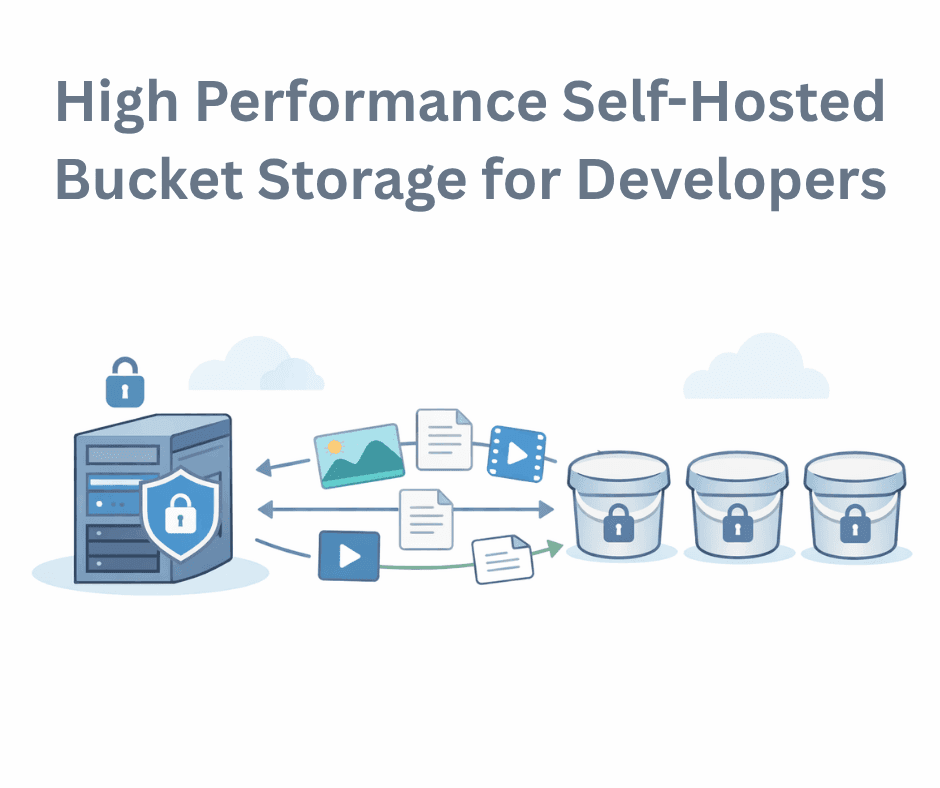
At scale, applications don’t store user-uploaded data such as images, videos, or other binary files directly in the database. Instead, this data is handled by a dedicated object storage system, commonly referred to as a bucket. These systems are designed for high performance, durability, and efficient access to large files.
New developers often make the mistake of converting image data to Base64 strings and storing them in the database. That slows everything down over time. Storing files in folders on a server also fails when you try adding more machines. Databases get cluttered, and servers can't share loads evenly.
To address these kinds of issues, modern systems use object storage solutions, which are also known as S3-compatible storage. These systems set up the file storage differently from application logic, making it easier to scale, replicate, and manage data efficiently.
Many organizations prefer to host their own object storage rather than rely on third-party providers. This approach, known as self-hosted storage, gives the teams more control over data security, compliance, and infrastructure. It is common practice in startups looking to reduce long-term costs, as well as in security-sensitive environments where data privacy is a major concern.
Large-scale industries like Instagram, WhatsApp, Facebook, Google, and Amazon heavily use distributed object storage systems to achieve high availability, performance, and reliability across their services.
Why Use Bucket Storage?
As applications grow, they generate large amounts of binary data, such as images, videos, backups, and documents. Storing this data directly on the application server can quickly lead to performance issues. File I/O competes with application processes, and concurrent read/write operations from many users can slow the system down or even cause instability.
Object storage (bucket storage) is designed to handle this workload efficiently. It separates file storage from the application layer, allowing each part of the system to scale independently.
Here are the main reasons developers use bucket storage:
- Cost efficiency: In self-hosted object storage, the primary expense will be infrastructure such as servers, disks, and networking. At scale, this can be more predictable and often cheaper than managed storage services.
- Data control and isolation: Your data stays within your own infrastructure. This is important for systems with strict privacy, compliance, or internal security requirements.
- Scalability: The storage system itself imposes no fixed storage limit. You can scale horizontally as needed by simply adding more nodes or disks, as long as you have enough hardware and proper configuration.
- Access control: Today's object storage systems provide fine-grained access control (policies, roles, signed URLs), making it easy to manage and maintain who can perform read/write operations on specific objects.
- Full operational control: Developers and DevOps teams have complete control over configuration, performance tuning, backups, and replication strategies.
Best High-Performance Self-Hosted Bucket Storage
Now let’s look at some of the best high performance self-hosted Bucket Storage for Developers available at present. These systems are widely used, actively developed, and suitable for use cases from small deployments to large-scale infrastructure. Each system has its own strengths and trade-offs, so you should choose based on your specific requirements.
1. SeaweedFS
SeaweedFS is an open-source project (Apache License 2.0) written in Go. It’s designed as a lightweight and highly scalable distributed storage system that can serve files with very low latency.
It supports multiple storage models, including S3-compatible object storage, file systems, and key-value storage. One of its key strengths is efficient handling of small files, which is often a bottleneck in other systems. It also supports replication, erasure coding, and tiered storage.
This project is actively maintained and has a growing community support, making it a better choice for a high-performance system.
GitHub: https://github.com/seaweedfs/seaweedfs
2. Ceph
Ceph is a mature, open-source distributed storage system released under a permissive license (LGPL/BSD-style components) and written primarily in C++.
It provides a unified storage system that supports:
- Object storage via RADOS Gateway and S3-compatible
- Block storage
- File storage (CephFS)
Ceph is widely used in enterprise environments because of its reliability and ability to eliminate single points of failure. It automatically distributes and replicates data across multiple nodes. However, this flexibility comes with complexity. Ceph can be harder to deploy and manage compared to lighter alternatives.
It has a strong growing community and commercial backing and is considered one of the most production-ready solutions.
GitHub: https://github.com/ceph/ceph
3. Garage

Garage is an open-source, S3-compatible distributed object storage system written in Rust and licensed under AGPLv3.
It is designed for small- to medium-scale system deployments and focuses on simplicity and resilience. Garage is particularly suitable for self-hosting setups where you want a distributed system without the operational complexity of something like Ceph.
While it is actively maintained by the community, its ecosystem and tooling are still evolving, so you may need to rely more on documentation and community resources.
GitHub: https://github.com/deuxfleurs-org/garage
4. Zenko
Zenko is an open-source multi-cloud data controller developed by Scality. It is developed and released under the Apache 2.0 license.
Rather than being just a storage system, Zenko focuses on managing and orchestrating data across different storage backends. It provides features like:
- Unified namespace across multiple storage systems
- Data replication and lifecycle management
- Search and metadata indexing
Zenko is useful when you need to manage data across hybrid or multi-cloud environments. Still, it is less commonly used as a standalone object storage system than others on this list.
GitHub: https://github.com/scality/Zenko
5. RustFS
RustFS is a newer open-source object storage system written in Rust and licensed under the Apache 2.0 license.
It has gained attention recently, especially after changes in the open-source object storage ecosystem (such as MinIO moving to maintenance mode and no longer accepting new features in its open-source version ).
RustFS system focuses on performance, memory safety, and S3 compatibility. This system is designed for modern workloads such as data lakes, AI pipelines, and large-scale data processing. Based on early benchmarks and community feedback, RustFS is suggested to have strong performance, but it is still relatively new and less tested in real-world projects compared to Ceph.
If you value modern architecture and performance, it is worth exploring, but be cautious when using it in critical production systems.
GitHub: https://github.com/RustFS/RustFS
Each of these tools solves the overall same core problem, scalable object storage, but in different patterns and ways. If you want simplicity, look at SeaweedFS or Garage. For enterprise-grade reliability, Ceph is a strong option. For newer, high-performance systems, RustFS is growing quickly.
Issues with MinIO
MinIO bucket storage was one of the most popular open-source, S3-compatible object storage systems, widely used by developers for self-hosted setups. However, its status has changed significantly.
As of early 2026, the MinIO open-source project repository has been officially archived and is no longer maintained, and no new features will be introduced. This followed a transition period where the project first entered maintenance mode in late 2025, meaning:
- No new features or performance improvements
- Limited or almost no review of community contributions and support
- Only occasional security fixes, with no guarantees
Over time, additional changes, such as removing features from the community edition and discontinuing distribution channels, signaled a shift toward a fully commercial offering.
Because of this, relying on the open-source version of MinIO for new projects introduces risk. You may face compatibility issues, a lack of updates, and long-term maintenance challenges.
If you are starting a new system, it’s better to evaluate actively maintained alternatives such as SeaweedFS, Ceph, Garage, and other emerging options.
Suggestions
Before picking a storage solution, spend some time understanding what your project actually needs and how it might grow over time.
- Start with your workload: consider the size of your files, how often they are accessed, and how many users will be reading or writing data simultaneously.
- Then look at scalability. Ask yourself how easily the system can grow with your data—whether that means adding more disks, more nodes, or handling higher traffic without major changes.
- It’s also important to consider operational complexity. Some tools are simple to set up and manage, while others require solid DevOps experience to run properly in production.
- Don’t ignore the ecosystem either. Active development, good documentation, and community support make a big difference when you run into issues or need long-term reliability.
In the end, there’s no single “best” option. Each system behaves differently depending on how and where you use it—choosing the right one early matters, because moving storage later is usually complex, time-consuming, and risky.
Conclusion
Using object storage is the standard approach for handling large-scale binary data. Many modern solutions offer S3 compatibility, making them easy to integrate into existing systems.
In this article, we explored some of the most relevant self-hosted options available today. The right choice depends on your specific use case; there is no one-size-fits-all solution.
Always try to avoid following trends without a deep understanding. Always focus on your actual requirements and make a decision based on performance, scalability, and maintainability. Normally, I suggest making the decision based on facts and statistics, not on trends. Different systems perform differently under different conditions, so choose carefully with long-term usage in mind.
Previous
Best VS Code Extensions for Python Developers
Next
Building and Deploying RustFS: S3 Storage Integration via Docker
You Might Also Like
 Design & Architecture
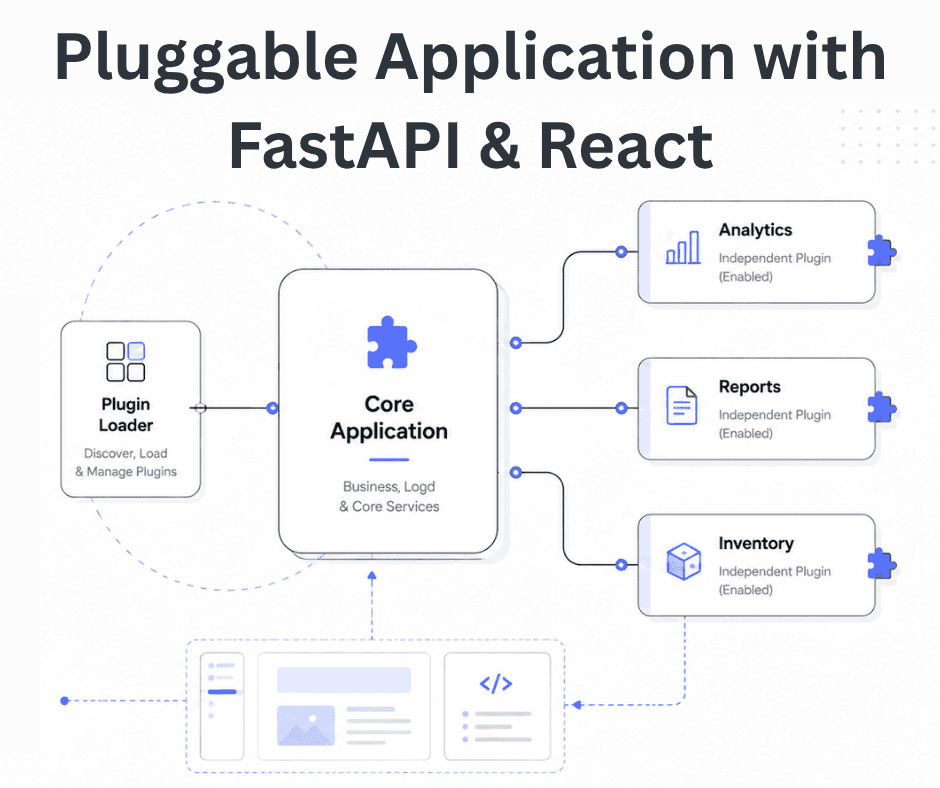
Building a Pluggable Application with FastAPI and React
Some applications need a different architectural approach from the traditional way of building web systems. One useful option is pluggable architectur
11 min read
 Design & Architecture
Beyond Monoliths: Designing Software with a Plug-and-Play Mindset
In the early days of software development, most companies and developers used monolithic architecture to build systems. It is a traditional approach t
5 min read
 Best Practices
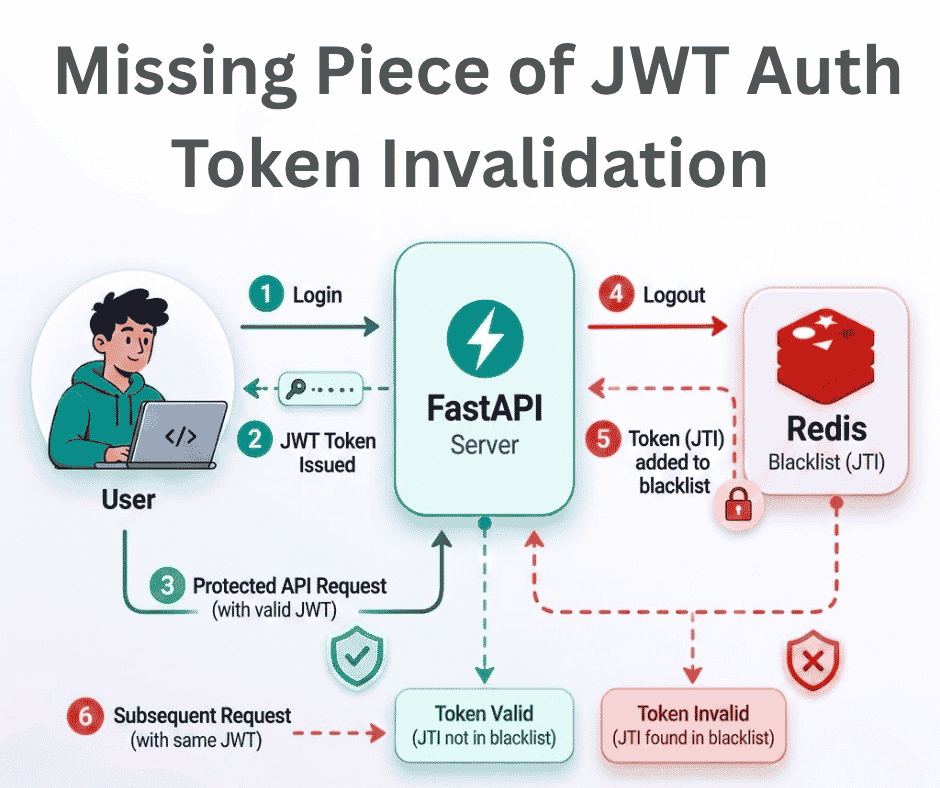
The Missing Piece of JWT Auth: Implementing Token Invalidation in FastAPI
JWT stands for JSON Web Token. It is an open standard that defines a compact and self-contained way to securely transfer data between two or more part
12 min read