Best Python web frameworks for building scalable websites
Discover the best Python web framework for building scalable websites and learn why Python frameworks are ideal for modern development.
4 min read • 3/19/2026
Python is one of the most widely used high-level, general-purpose programming languages in the world today. It powers everything from web development and automation to data science, machine learning, and web scraping.
Its popularity stems from its simplicity, strong community support, and the vast number of libraries available for nearly every imaginable task. Whether you’re building a simple script or a large-scale application, Python offers tools and frameworks that make development efficient and enjoyable.
Why Learn Python?
In today’s time, there is a significant technological shift toward AI/ML, which is changing how we used to write code and will continue to shape programming practices in the near future. Here are some reasons to learn Python:
- Easy and simple for beginners: Python’s clear syntax and readability make it an ideal language for those just starting their programming journey.
- Supports multiple programming paradigms: Python allows both object-oriented and procedural programming, giving developers flexibility in how they structure their code.
- Extensive libraries: There are libraries available for nearly every task, from data analysis to web development, making development faster and more efficient.
- Versatile applications: Python is widely used in machine learning, data science, web scraping, and automation tasks.
- Strong web development support: Popular frameworks like Django and Flask make building scalable web applications straightforward.
Python is widely used for building everything from simple to complex backend systems. There are several best Python web frameworks for building scalable websites. These frameworks can be used to build secure systems and are trusted by popular companies around the world. Here are some reasons to use a Python web framework:
- Simplifies complex development: Python web frameworks handle much of the complexity behind the scenes, providing developers with abstracted functions that allow them to build complex applications quickly and securely.
- Easy database connectivity: Managing and maintaining databases becomes much easier. Frameworks handle the complexity of connecting to databases, supporting popular options like Oracle, MySQL, PostgreSQL, MongoDB, and more, giving developers a wide range of choices.
- Simplified debugging and deployment: Python frameworks provide powerful debugging tools and other utilities that make deployment faster and more straightforward.
- Strong community support: Most Python frameworks have large, active communities. If you encounter issues, you can easily seek help from the community, ensuring problems are resolved quickly.
While talking about the popular web framework. Let’s have a look at some currently mostly used website development frameworks used by popular companies.

Django is a popular Python-based full-stack framework. It uses an MVT (Model-View-Template) architecture and is considered a robust and simple framework for web developers, helping to build clean, efficient, and powerful websites in minimal time. It is also used by giant companies like Instagram, Google, NASA, and others. Django models use a powerful ORM (Object-Relational Mapper) layer that supports multiple databases and simplifies database operations.
Django is considered a simple full-stack framework. It has a model section where we define the database schema and migrate it to the database. The URLs and views sections are used to define routing, perform the required operations, and render templates. The view is responsible for returning the templates. The template engine maps the data using Jinja and returns the UI of the requested path.
If you are new to web development, you can explore many features like databases, security, routing, and conditional rendering with this framework. You can build full-stack applications using this simple framework. If you continue exploring, you can learn about the Django REST Framework, which is used to develop APIs.

Flask is also one of the popular Python-based lightweight yet powerful web frameworks. It is called a micro-framework because it provides only the essentials for web development without adding unnecessary complexity.
Flask does not have as many built-in features as Django. It doesn’t have authentication, an admin panel, etc. We need to add them manually if we need them. Not including these complex features makes it a simple and easy framework to work with. The best part of this framework is that you can create RESTful APIs for advanced websites. Most developers choose it when they need to create a simple yet effective website.
If you are willing to learn about APIs, then Flask may be your initial choice, as it provides simple tools for API development. To host a Flask app, we don’t need an additional server, which makes it loved by developers as it reduces the hassle of maintaining a separate server.
FastAPI is a modern and popular Python-based high-performance web framework. It is mainly used to build APIs quickly and efficiently. It is an asynchronous framework designed with simplicity, allowing developers to create RESTful APIs easily. It has many built-in features like automatic validation, error handling, and Swagger UI for API testing.
It is a professional and currently trending framework due to its simplicity and the rise of machine learning. It includes features like automatic documentation, Python type hints, Pydantic models for data validation, and dependency injection to keep the code clean and modular. It also supports OAuth2, JWT, and request validation to improve security.
FastAPI can be your next choice of framework as it is simple to learn and offers high performance. If you are building APIs for a complex system, then I highly recommend using this framework. From my experience, I haven’t found a better or simpler approach than FastAPI for building complex backend system APIs.
Conclusion
If you are thinking about learning Python and web development in Python, then I highly recommend learning every major Python framework. You can master Django, Django REST Framework, FastAPI, and Flask, but you should at least have an idea of how each framework works. We don’t need to know everything, but when it comes to implementation, we must have enough confidence to use the documentation and build what is required.
To build this confidence, you need to have your Python basics clear. You can practice on different platforms to strengthen your fundamentals and understand Python more deeply.
Previous
How to add Custom Middleware in Django?
Next
What are the interview questions for a Python developer?
You Might Also Like
 Design & Architecture
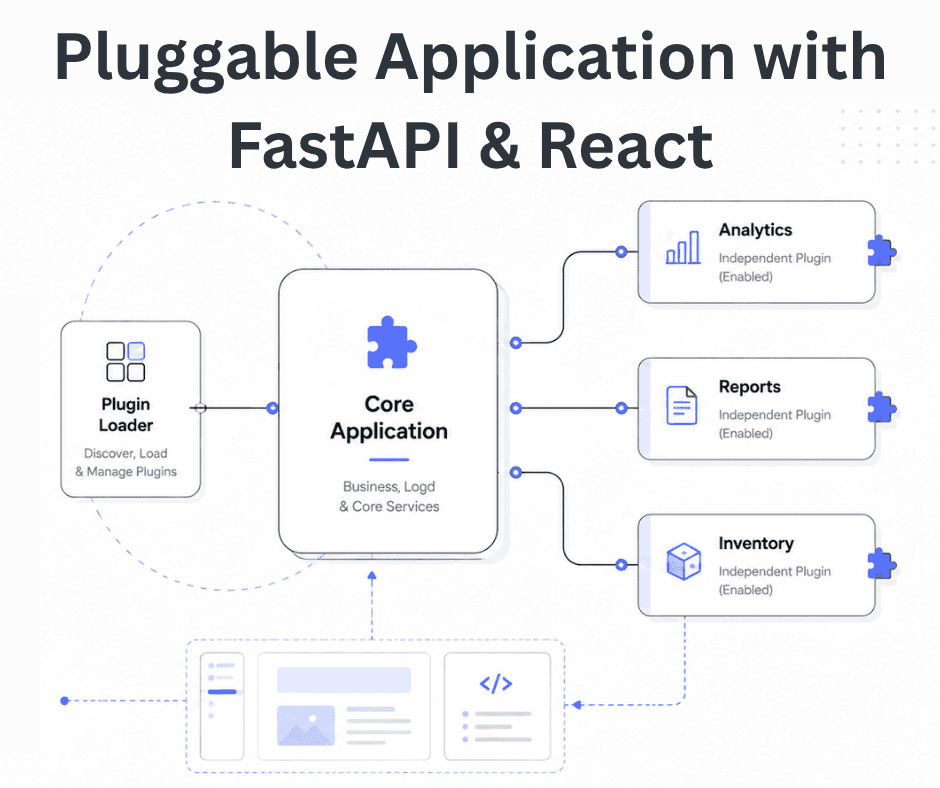
Building a Pluggable Application with FastAPI and React
Some applications need a different architectural approach from the traditional way of building web systems. One useful option is pluggable architectur
11 min read
 Design & Architecture
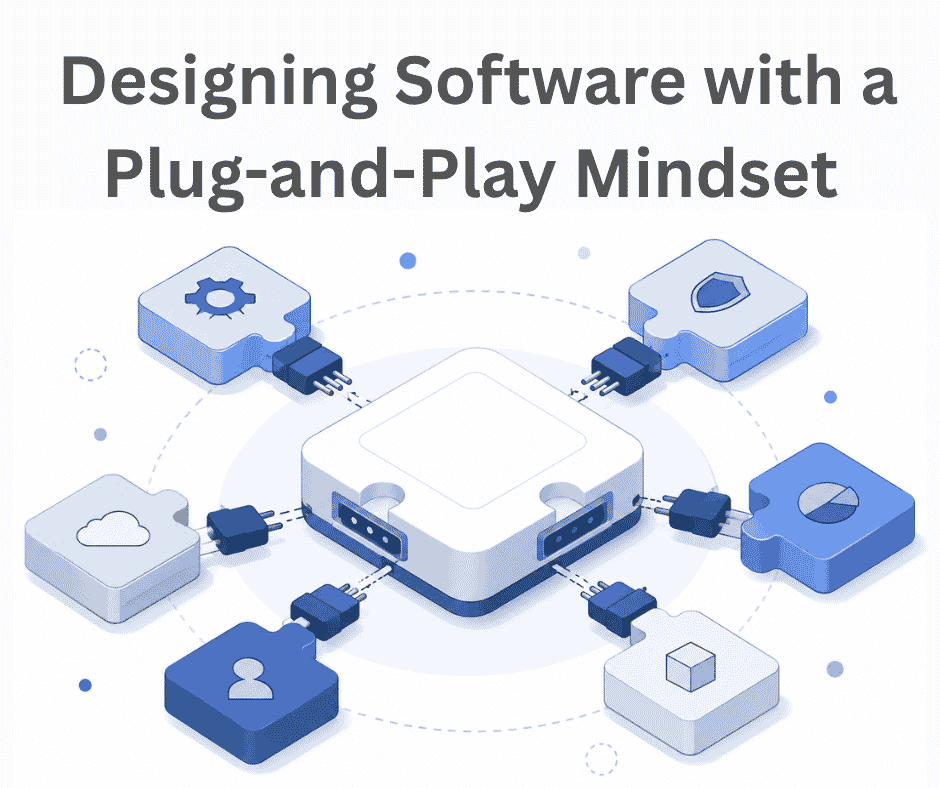
Beyond Monoliths: Designing Software with a Plug-and-Play Mindset
In the early days of software development, most companies and developers used monolithic architecture to build systems. It is a traditional approach t
5 min read
 Best Practices
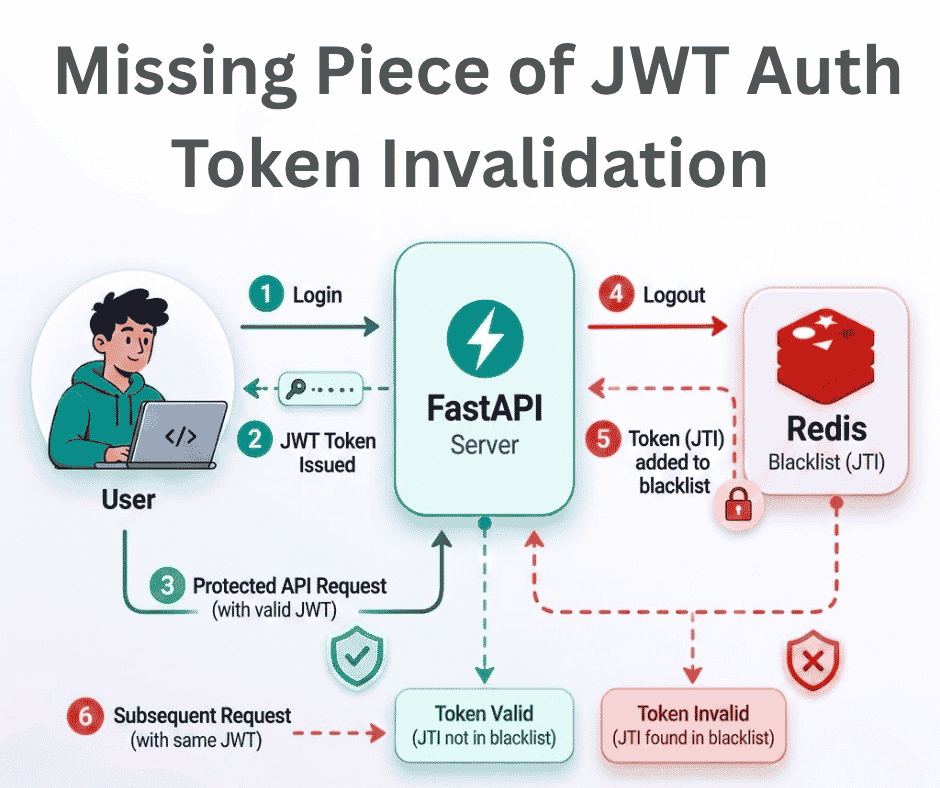
The Missing Piece of JWT Auth: Implementing Token Invalidation in FastAPI
JWT stands for JSON Web Token. It is an open standard that defines a compact and self-contained way to securely transfer data between two or more part
12 min read